By Kevin | BrainButterfly.org
There’s a moment every neurodivergent parent recognizes.
When a joke—meant to be playful—suddenly turns into a flood of tears.
That moment happened with my son.
Like many kids with ADHD and big hearts, my son is still learning the invisible social rules of joking. He tries on humor the way some kids try on shoes—seeing what fits. But when he called me a silly name and I jokingly responded back with “oh come on,” it didn’t feel silly to him. It felt like a sting. And he burst into tears.
This is where the real learning begins—not about behavior, but about emotional safety.
Neurodivergent kids often:
Use joking to connect, but struggle with boundaries Don’t always recognize when a joke feels too sharp Feel deep rejection when a playful comment backfires Are incredibly empathetic—and may cry from guilt or shame
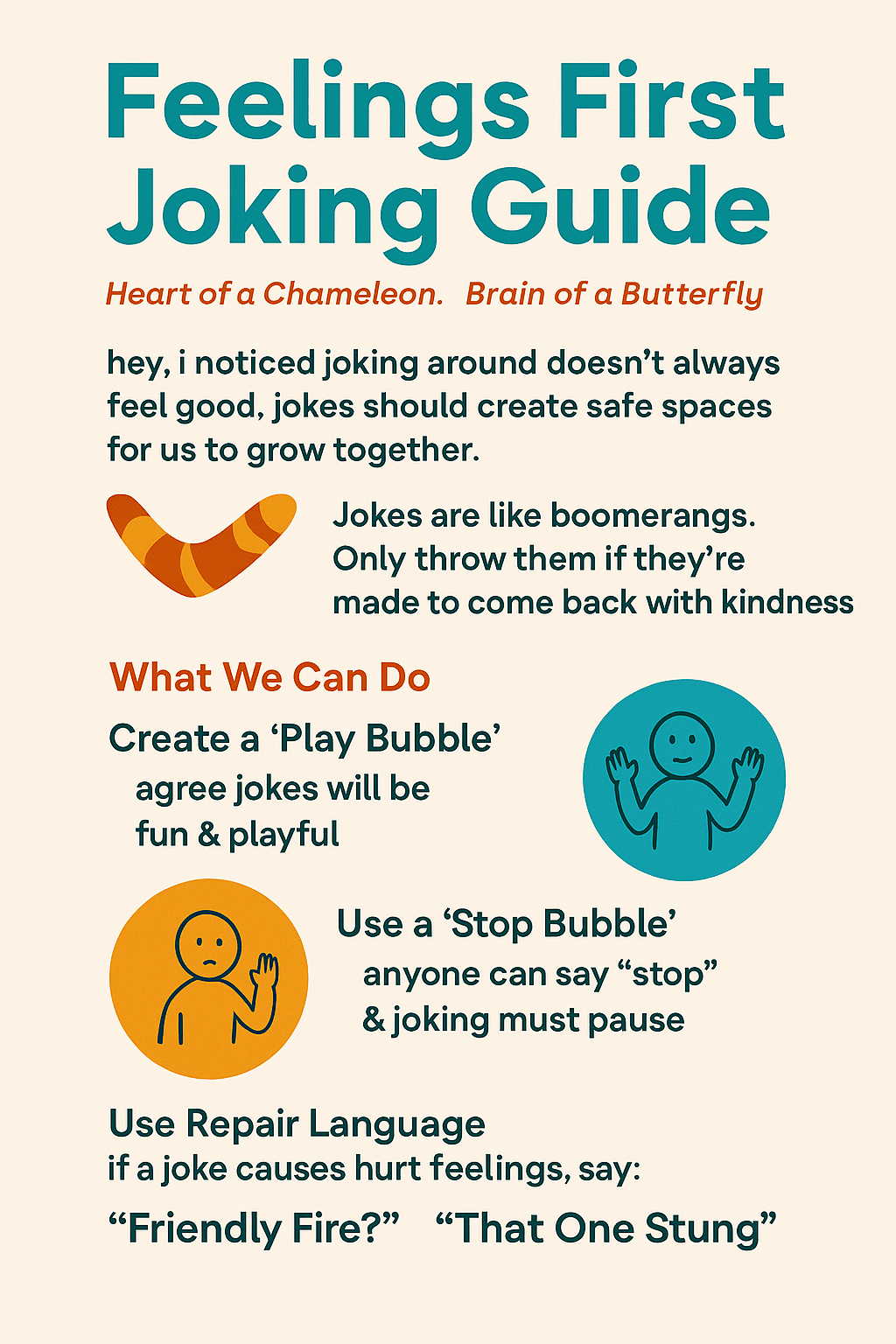
That’s why we created the Feelings First Joking Guide—a printable, visual tool to help my son (and other kids like him) learn to recognize safe, shared humor from hurtful teasing.
What We Taught:
Jokes are like boomerangs. If you throw them out, they come back. Make sure they’re soft! Create a “Play Bubble.” Everyone agrees we’re being silly. Use a “Stop Bubble.” If something hurts, we pause, not punish. Have repair language. “Friendly fire?” or “That one stung.”
📥 Download the full toolkit:
Visual guide Stop/Play Bubble cards Joke Practice Worksheet Parent-Child Conversation Guide
🧡 Helping my son understand his emotions is part of helping him love his whole self.
We don’t shame the tears. We listen to them.
➡️ Help fund trauma-informed resources for kids like my son:
🦋 Learn more at BrainButterfly.org
 Site Title✦ ADHD | Autism | Emotional Processing | Trauma Healing ✦
Leave a comment